That's the day the EU Right to Repair Directive takes full legal effect across all 27 member states. And while most of the public conversation around it has focused on what consumers get - longer warranties, cheaper repairs, less e-waste - the business conversation that hasn't happened loudly enough is what it means for the wholesale supply chain behind those repairs.
I've been having this conversation with our EU-based clients for the past 18 months. The ones who've been paying attention are already repositioning. The ones who haven't are about to find themselves scrambling to meet demand they didn't plan for, from repair shops suddenly operating in a legally reinforced repair-first environment.
This article is the briefing I wish I could put in front of every wholesale iPhone screen distributor serving Europe right now. It covers what the directive actually requires, what it means in concrete terms for your inventory strategy, where the market opportunity is sharpest, and the five things every distributor should be doing before the end of July.
Part 1: What the Directive Actually Says - Stripped of the Legal Language
The EU Right to Repair Directive takes effect on July 31, 2026. It gives consumers the right to request repairs from manufacturers at a reasonable price and within a reasonable timeframe, extends warranty periods by 12 months when a customer chooses repair over replacement, and requires brands to keep spare parts available for years after a product goes on sale.
For smartphones and tablets specifically, manufacturers must make 15 types of spare parts available to professional repairers within 5 to 10 working days for seven years after a model is discontinued. The directive also prohibits manufacturers from using contractual clauses, hardware, or software techniques that impede repair.
Third-party repair shops must have access to the same spare parts that authorized service centers use. This opens the repair ecosystem and gives consumers more choices.
Three implications stand out for the wholesale supply chain:
Implication 1: Repair is now the legally reinforced default.
When a device fails within the warranty period, the repair path has been legally strengthened. Consumers who previously might have replaced a device because repair felt uncertain or inaccessible are now operating in an environment where repair is the documented, government-endorsed option. According to the European Commission, 77% of EU citizens already prefer fixing equipment instead of buying new. The legislation gives that preference institutional backing.
Implication 2: Spare part availability becomes a compliance requirement, not a market choice.
Manufacturers who previously managed part availability strategically to encourage upgrade cycles are now legally required to provide those parts at reasonable prices for seven years post-discontinuation. For independent repair shops and their wholesale suppliers, this means the competitive landscape shifts: OEM parts become less artificially restricted, but the volume of repairs that flow to independent shops - which typically offer faster service and lower prices - is projected to grow significantly as consumer awareness increases.
Implication 3: The repair ecosystem is explicitly opened to third parties.
Third-party repair shops must have access to the same spare parts that authorized service centers use. This is the provision that most directly benefits independent repair chains and their distributors. It removes the argument that consumers should use manufacturer service channels because they're the only ones with access to genuine parts.

Part 2: The Market Numbers Behind the Opportunity
Legislation creates the framework. Market data tells you the size of the opportunity it's unlocking.
When repair becomes easier to choose, it also becomes a more stable market. Independent repair shops, refurbishers, and circular service providers gain predictable demand, with projected repair-sector employment growth suggesting net gains in specialized labor markets.
The EU repair market was already on a strong growth trajectory before this legislation. The Right to Repair Directive seeks to ensure that European consumers will have access to products that last longer and, if something goes wrong, will not need to be discarded. The policy accelerates a behavioral shift that was already underway.
For iPhone specifically, the repair market dynamics in Europe are compelling:
The iPhone 14 series is currently entering peak repair demand - devices are 3+ years old, screens are cracking at the highest rate in their lifecycle, and a meaningful portion of users in Germany, France, the UK, and the Netherlands have explicitly decided to hold rather than upgrade. The iPhone 13 series is fully in that window. Both represent high-volume, margin-positive models for any distributor with reliable supply.
The iPhone 15 series repair window is opening. Devices are just under three years old. Repair frequency will accelerate through late 2026 and into 2027. Distributors who establish supply chain depth now - before the peak demand surge - will be better positioned than those who scramble to build inventory during it.
Customers increasingly prefer sustainable consumption, positioning repair as a growth lever for businesses. Forward-looking retailers are leveraging the directive as a way to differentiate themselves. For wholesale distributors, this means your repair shop clients are looking for suppliers who can reliably support their growth, not just fill spot orders.
Part 3: What Changes Specifically for Distributors Supplying EU Repair Shops?
The legislative change affects your clients' businesses directly, which flows upstream to your supply chain. Here's where it matters most.
Demand volume will increase - and become more predictable
The primary effect of the directive is demand stabilization. When repair is legally reinforced and consumers are actively educated about their repair rights through the EU's upcoming European Repair Platform (launching 2027), the flow of devices into repair shops becomes more consistent and less dependent on consumer awareness variability.
For a distributor, predictable demand is operationally valuable. It supports forward purchasing commitments, reduces emergency procurement costs, and allows you to negotiate better volume pricing from your factory. If you're currently buying screen inventory reactively - ordering when stock runs low - the legislative shift is an argument for moving to proactive forward planning.
Your clients' competitive position is strengthening
Independent repair shops in EU markets are the direct beneficiaries of the directive's third-party access provisions. As Apple's Self Service Repair program and Microsoft's expanding repair partnerships reflect the trend toward broader parts availability, the perceived quality gap between independent repair shops and manufacturer service centers is narrowing. Shops that already operate with quality-verified parts and documented repair processes will be well-positioned to capture new customers who previously defaulted to manufacturer service.
The implication for you as their wholesale supplier: your clients need a supply chain capable of supporting genuine quality claims, not just price-competitive sourcing. A repair shop that markets itself as offering "quality-verified iPhone screen replacement" needs a distributor who can support that claim with grade documentation, consistent batch quality, and a defect rate they can stand behind.
Pricing pressure from manufacturer channels will shift
Spare parts must be priced reasonably. The directive does not set maximum prices, but the intent is clear: parts should not be priced so high that repair becomes more expensive than replacement. Brands that inflate spare parts prices to discourage repairs will face regulatory scrutiny.
This creates a competitive floor for aftermarket wholesale supply. If OEM spare parts become more accessible and are required to be reasonably priced, the total market for screen replacements expands - but the pricing umbrella that aftermarket parts have historically operated under (being significantly cheaper than OEM) remains. Quality aftermarket supply at factory-direct wholesale pricing continues to represent the best margin structure for independent repair shops operating at scale.
Part 4: The Five Inventory Adjustments Every EU Distributor Should Make Now
Based on the market dynamics above and the legislative timeline, here are the five specific supply chain adjustments we're recommending to our EU distribution clients ahead of the July 31 deadline.
Adjustment 1: Increase iPhone 13 and 14 Stock Depth by 25–30%
Both models are at or entering peak repair demand right now. The legislative shift will add a consumer awareness layer to demand that wasn't there before - repairs that previously fell through because the customer didn't know their rights or didn't feel confident in independent shops will increasingly convert as the directive's consumer education components take effect.
We're seeing order frequency increase among our UK and German clients on iPhone 13 and 14 Soft OLED already. The clients who started building depth three months ago are better positioned than those who waited.
Recommended stock allocation for a 200-unit monthly operation:
| Model | Grade | Current Recommended Monthly | Post-July Recommended |
|---|---|---|---|
| iPhone 14 | Soft OLED | 35–45 units | 45–55 units |
| iPhone 14 Pro | Soft OLED | 20–28 units | 26–34 units |
| iPhone 13 | Soft OLED | 25–35 units | 32–42 units |
| iPhone 13 Pro | Soft OLED | 15–22 units | 20–28 units |
| iPhone 15 | Soft OLED | 18–25 units | 25–32 units |
Adjustment 2: Build an Original Refurbished Inventory Tier
The Right to Repair directive's consumer education component will accelerate something that's already happening in premium EU markets: customers asking specifically about genuine parts.
The directive promotes pricing transparency, requiring manufacturers to disclose spare part costs and ensuring fair access to original, aftermarket, and refurbished components without restrictions.
As consumers become more aware that repair parts exist on a quality spectrum - and as the directive explicitly validates original, aftermarket, and refurbished components as legitimate repair options - the segment of customers willing to pay for Original Refurbished screens will grow. In Germany and the Netherlands particularly, we've already tracked this trend in our order data: Original Refurbished orders from EU clients grew 34% year-over-year in 2025.
For distributors who currently stock only Soft OLED, adding Original Refurbished at 10–15% of your iPhone 13/14/15 volume positions you to serve premium shop clients and capture upsell margin that will become more significant as quality awareness increases.
Adjustment 3: Get Your Documentation in Order
The directive's compliance requirement that flows upstream to distributors is quality documentation. If your repair shop clients are going to operate credibly in a right-to-repair environment - where consumer awareness of part quality is actively being raised - they need to be able to demonstrate that the screens they install come from a verified, quality-controlled supply chain.
This means your supplier should be able to provide: ISO 9001 certification, RoHS compliance documentation, batch-specific QC inspection reports, and defect rate data. If your current supplier cannot produce these documents on request, you're carrying a documentation risk in a regulatory environment that is explicitly moving toward supply chain transparency.
We provide full documentation packages to all wholesale clients. If you need to verify what's in your current supplier's documentation, now is the right time to ask.
Adjustment 4: Establish Forward Purchasing Agreements for Key Models
Reactive purchasing - ordering when stock runs low - becomes increasingly costly as demand increases predictably. A forward purchasing agreement for your top three models (typically iPhone 13, 14, and 15 for EU-facing operations) locks in pricing, guarantees stock allocation, and eliminates the logistics cost of emergency orders.
At our factory, we offer forward allocation arrangements for clients committing to regular monthly volumes. The pricing benefit varies by model and volume tier but typically represents 8–12% below spot pricing on current-generation OLED. The operational benefit - knowing your stock is reserved before you need it - is harder to put a number on but consistently cited by our EU distribution clients as the most valuable element of a long-term supply relationship.
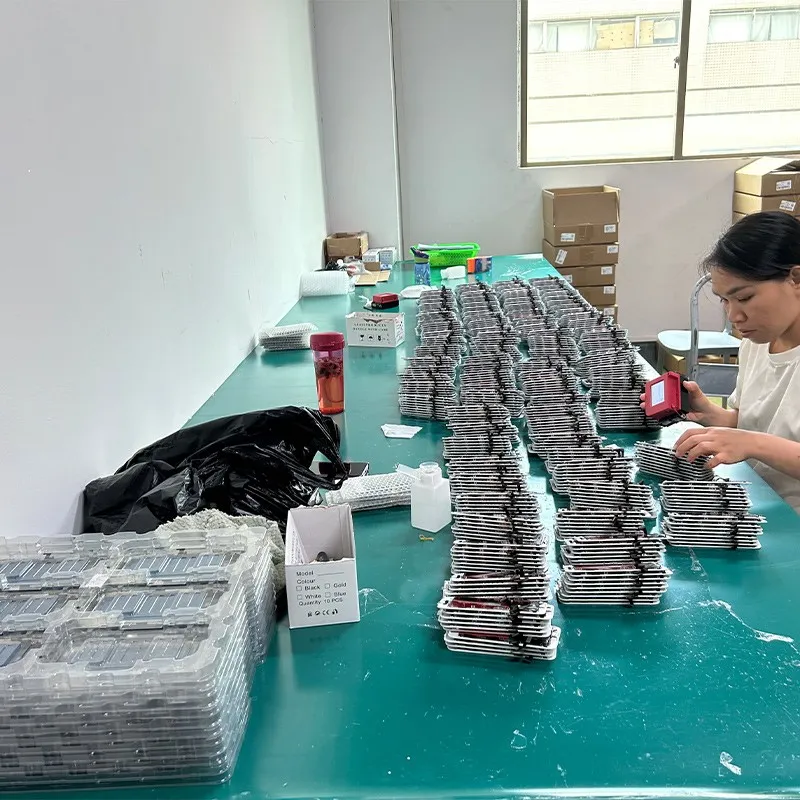
Adjustment 5: Review Your Logistics Setup for Speed
Spare parts availability requirements specify delivery to professional repairers within 5 to 10 working days. While this requirement applies to manufacturers, it sets a consumer expectation that flows through the repair chain. Repair shops will be evaluated by their customers on turnaround time. A shop that runs out of iPhone 14 screens and waits 12 days for resupply from a slow logistics chain loses jobs to competitors with tighter supply.
For UK distributors post-Brexit, this means having either local buffer stock or a freight arrangement that reliably delivers from Shenzhen in under 6 business days. DHL Express from our factory to major UK hubs consistently runs 3–5 business days - but this requires a freight account set up and tested before you need it urgently, not during a stock-out.
For EU distributors, the same logic applies. Consider whether your current stock depth provides adequate cover for a 5–7 day resupply cycle, and whether your safety stock threshold needs to increase given the expected demand uptick.
Part 5: The Quality Credibility Opportunity - Why July 2026 Rewards Distributors Who've Done It Right
There's a dimension of this legislative shift that doesn't get discussed in most supply chain conversations, and I think it's actually the most significant long-term opportunity for distributors who've built quality-verified supply chains.
The directive raises consumer quality awareness systematically. As the EU's communication campaigns around right to repair reach consumers, as repair shops receive more customers who've specifically researched their options, and as the European Repair Platform comes online in 2027 making repair options more visible and comparable - the repair shops that can credibly claim quality-verified parts will differentiate meaningfully from those that can't.
This is the business case for caring about defect rates, batch documentation, and grade verification that goes beyond operational efficiency. It becomes a marketing differentiator that the regulatory environment is actively building demand for.
A repair shop in Munich or Amsterdam that can show customers "we use ISO-certified factory-direct parts with documented quality verification" has a competitive position that a shop buying from the cheapest unverified source doesn't. As a distributor, your ability to supply that documentation is a direct contributor to your clients' competitive positioning.
We've watched this dynamic play out with our UK clients over the past 18 months, as UK consumers became more informed about independent repair options following the UK's own consumer right-to-repair awareness campaigns. The shops that invested in quality supply chain documentation saw their review scores improve and their repeat customer rates increase. The ones that were still buying on price alone are losing ground in exactly the premium market segment that's growing fastest.
Part 6: Models to Watch - Where EU Demand Is Peaking in 2026
Based on our shipping data and client feedback from EU markets, here's the model-by-model demand picture heading into H2 2026:
iPhone 14 series - Peak window, stock now.
The iPhone 14 launched September 2022. Users are at the 3.5-year mark - the sweet spot of the repair lifecycle. Devices have accumulated damage, users have decided to keep them, and the right-to-repair awareness campaign will add incremental demand from consumers who might previously have replaced rather than repaired. iPhone 14 Soft OLED is our highest-velocity EU model right now and we expect that to hold through Q1 2027.
iPhone 13 series - Fully in peak, high volume.
iPhone 13 is the model that drives the largest raw volume in EU repair markets currently. Parts prices have stabilized, margins are consistent, and supply is reliable. This is your most predictable inventory category - stock it accordingly.
iPhone 15 series - Opening repair window, build now.
iPhone 15 devices are approaching three years old. Repair frequency is increasing month-on-month. Wholesale prices on 15-series are still 15–20% above where they'll settle in 12 months, but the demand trajectory justifies building your 15-series supply relationship now rather than waiting for the price to fall and scrambling for supply alongside every other distributor doing the same thing.
iPhone 12 series - Mature, still relevant in price-sensitive markets.
Germany and Poland show continued strong iPhone 12 repair volumes. Parts prices are favorable. If you're supplying budget-conscious repair markets in Eastern Europe, iPhone 12 Soft OLED at current pricing represents good margin with reliable supply.
iPhone 16 series - Early stage, buy cautiously.
16-series parts supply is still maturing. We recommend modest initial inventory for EU clients - enough to serve demand without carrying excess at prices that will likely soften through Q3 2026. Build your 16-series supply relationship now; don't build heavy inventory yet.
Part 7: The Compliance Question - What Distributors Are Responsible For
A question we've received from several EU-based clients is whether distributors themselves have direct compliance obligations under the directive.
The short answer: the directive's direct obligations fall on manufacturers and retailers of covered products, not on the wholesale supply chain serving repair shops. Your obligations under the directive as a distributor are indirect - you're affected by what your repair shop clients need, not by direct regulatory requirements on your business.
However, there are two areas where being ahead of the compliance curve benefits your business directly:
Product documentation:
As repair shops increasingly need to demonstrate quality-verified parts sourcing to consumers and potentially to regulators, distributors who provide ISO certification, RoHS documentation, and batch QC records become preferred supply partners over those who can't. This isn't a legal requirement on you - it's a commercial requirement from your clients.
Parts labeling and authenticity:
The directive covers products like phones, tablets, and household appliances, with manufacturers obligated to provide access to spare parts and prohibited from using techniques that impede repair. In the spirit of this framework, repair shops operating under its influence will increasingly ask about parts provenance. Being able to accurately represent what grade your parts are (Incell / Soft OLED / Original Refurbished) and where they were manufactured positions you credibly in that conversation.
The Bottom Line for Wholesale iPhone Screen Distributors
The EU Right to Repair Directive taking effect July 31, 2026 is not a bureaucratic formality. It is the largest structural shift in the European repair parts market in a decade, and its effects will compound over the next five years as consumer awareness builds and the European Repair Platform brings more transparency to the repair ecosystem.
For iPhone LCD wholesale distributors supplying EU markets, the window to prepare is closing. The distributors who will gain market share from this shift are the ones who:
- Have reliable factory-direct supply relationships with quality-verified inventory
- Can provide grade documentation and QC records their repair shop clients need
- Are building iPhone 13, 14, and 15 stock depth ahead of the demand increase
- Are establishing Original Refurbished inventory tiers in anticipation of growing quality-aware consumer demand
- Are thinking about supply chain predictability, not just per-unit price
The directive doesn't change what good wholesale sourcing looks like. It raises the consequences of getting it wrong - and raises the rewards for those who've gotten it right.
Frequently Asked Questions
When does the EU Right to Repair Directive take effect?
July 31, 2026, across all EU member states under Directive (EU) 2024/1799. The UK has separate but parallel right-to-repair measures already in effect. MobileSentrix
Does the directive apply to iPhone screens specifically?
Yes. For smartphones and tablets, manufacturers must make 15 types of spare parts available to professional repairers within 5 to 10 working days for seven years after a model is discontinued. Screen assemblies are among the covered part types.
Will OEM parts become cheaper due to the directive?
The directive requires spare parts to be priced reasonably, but does not set maximum prices. Its intent is that parts should not be priced so high that repair becomes more expensive than replacement. OEM part pricing will moderate over time, but quality aftermarket supply at factory-direct pricing will remain the best margin structure for independent repair operations.
Do distributors have direct compliance obligations under the directive?
Direct obligations fall on manufacturers and retailers of covered products. Wholesale distributors are affected indirectly through their clients' requirements for quality documentation and parts authenticity transparency.
What's the best way to prepare my inventory before July 31?
Increase stock depth on iPhone 13 and 14 series (peak demand now), begin building iPhone 15 inventory (opening repair window), add Original Refurbished tier for premium market segments, and ensure your supplier can provide the quality documentation your repair shop clients will increasingly need.